How this Nobel Prize winning Economist might save the world?

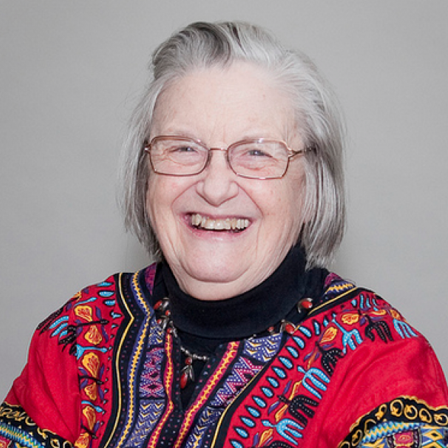
Recently, I found myself waking up bolt upright and surprisingly alert at 3am. I turned on my laptop to check my email and before I knew it I was learning all about a remarkable female Nobel prize winning economist called Elinor Ostrom.
I'm surprised to have not heard her name more widely mentioned because her research is so hopeful, pertinent and pragmatic to the biggest challenges we are facing today - The Climate Crisis.
In a nutshell, Elinor Ostrom found numerous case studies of groups compelled to share natural resources like pastures, fishing waters, grazing land and forests. Her field based research effectively disproved the prevailing assumptions of economists that collectively used natural resources would be over-exploited and destroyed in the long-term - the so called 'Tragedy of the Commons'.
The Tragedy of the Commons refers to a situation in which individuals with access to a public resource (a common) act in their own interest and, in doing so, ultimately deplete the resource. It assumes a somewhat dispiriting stance about people. The reality is more complex. The unquestioned dominance of this perspective has led to a situation where in the UK, the majority of our beautiful countryside is out of bounds for most of the population. 92% of the countryside has no right to roam and 97% of rivers have no uncontested rights of navigation.
In practice, people don't descend to this worst possible outcome. Elinor found instead that groups and communities found ways to share natural resources for the benefit of all and in a way that promoted their longevity. The way these communities were able to do so was by collaborating and cooperating. Over time, communities developed self-governing rules that promoted economic and ecological sustainability.
This isn't to paint a utopian picture because Elinor also found field based cases that supported the Tragedy of the Commons view but these shared certain characteristics namely: short term thinking, an absence of communication between groups, a lack of trust for each other and no reliable access to external enforcement i.e. legal redress.
In contrast, the cases where people worked together for the benefit of the land had the following characteristics:
-
Clearly defined boundaries. In particular, who is entitled to access to what? Unless there’s a specified community of benefit, it becomes a free for all, and that’s not how commons work.
-
Locally adapted rules to fit. There is no one-size-fits-all approach to common resource management. Rules should be dictated by local people and local ecological needs. For example, agreeing to not catch very young fish.
-
Participatory decision-making There are all kinds of ways to make it happen, but people are more likely to follow the rules if they had a hand in writing them. Involve as many people as possible in decision-making.
-
Commons must be monitored. Once rules have been set, communities need a way of checking that people are keeping them. Commons don’t run on good will, but on accountability.
-
Sanctions for those who abuse the commons should be graduated. Ostrom observed that the commons that worked best didn’t just ban people who broke the rules. That tended to create resentment. Instead, they had systems of warnings and fines, as well as informal reputational consequences in the community.
-
Accessible Conflict resolution. When issues come up, resolving them should be informal, cheap and straightforward. That means that anyone can take their problems for mediation, and nobody is shut out. Problems are solved rather than ignoring them because nobody wants to pay legal fees.
-
Commons need the right to organise. Your commons rules won’t count for anything if a higher local authority doesn’t recognise them as legitimate.
-
Commons work best when nested within larger networks. Some things can be managed locally, but some might need wider regional cooperation – for example an irrigation network might depend on a river that others also draw on upstream.
The ‘tragedy of the commons’ is real, but not inevitable. It is possible to create and operate thriving commons as Elinor found many examples of throughout the world. There are ways to govern aside from private ownership and government control. In an age where we all depend on global commons such as the atmosphere or the oceans, we should be paying more attention to commons management.